






At the Bone Marrow Transplant Centre of Anadolu Medical Center, dedicated to the paediatric population, childhood diseases requiring a transplant are managed in a multidisciplinary way, thanks to experienced teams of specialists and state-of-the-art technology.
Which diseases are treated?
A bone marrow stem cell transplant is carried out in patients aged 0 to 18 with malignant or benign diseases requiring a transplant. Benign conditions treated include haemoglobinopathies (Mediterranean anaemia / thalassaemia major, sickle cell disease), aplastic anaemia, immune deficiencies and metabolic diseases, as well as malignant diseases, including leukaemias and certain tumours.
At the Paediatric Bone Marrow Transplant Centre, depending on the type of disease, the transplant can be carried out using the patient's own cells, a family member or unrelated donors. For this, the tissue groups, referred to briefly as "HLA", are compared between the patient and the donor, and the donor with the highest level of compatibility is preferred. Each patient is assessed individually and the most suitable donors are selected according to the group and stage of the disease
Who makes up the medical team of the paediatric bone marrow transplant centre?
Our patients are cared for by a multidisciplinary team. Alongside an experienced specialist in paediatric haematology and oncology and a paediatrician experienced in bone marrow stem cell transplantation, a multidisciplinary team takes part, including a paediatric infectious diseases specialist, a paediatric nephrologist, a paediatric cardiologist, a paediatric gastroenterologist and a paediatric intensive care specialist. In addition to the medical staff, the team also includes 14 nurses experienced in bone marrow transplantation.
What are the types of bone marrow transplant?
There are two types of bone marrow stem cell transplant: autologous and allogeneic. In an autologous bone marrow transplant, the stem cells are collected from the patient themselves. When the patient's bone marrow starts producing new stem cells again, generally within 7 to 14 days of chemotherapy given at the appropriate time, the cells are collected. Then, after high-dose chemotherapy suited to the child's disease is given, their own stem cells are returned to them.
How are stem cells collected for a bone marrow transplant?
Autologous stem cells are generally collected from the peripheral blood using an apheresis machine, in a clean room and without anaesthesia. In an autologous transplant, the cells are taken from the patient themselves and then reinjected. There is therefore no tissue compatibility problem. Autologous transplants can mainly be used in neuroblastoma, Hodgkin lymphoma, Ewing sarcoma, germ cell tumours and certain brain tumours.
In an allogeneic bone marrow transplant, the stem cells are taken from another donor — a tissue-compatible donor. Here again, a brother or sister, or another family member, is preferred as donor; where there is no such donor, unrelated donors, from the country or abroad, as well as umbilical cord blood, are used.
Is there a risk of the disease returning after treatment?
What steps must the patient follow?
The patient is generally first seen as an outpatient. The necessary tests are requested and, after discussion within the stem cell transplant board, the decision on whether or not to carry out the transplant is made. If an allogeneic transplant is decided on, tissue compatibility is checked first and, once a compatible donor is found, preparation begins. Blood tests check infection markers in particular. Once the results have been discussed with the other departments involved, the patient is admitted to the Bone Marrow Transplant Centre. In this centre, where infection control is at its highest level, only one companion is allowed with the child and no visits are permitted. In negative-pressure isolation rooms, children can take their daily bath.
How long does the patient stay in hospital before the transplant?
Before the transplant, the patient stays about 7 to 10 days at the Bone Marrow Transplant Centre. The preparations before the transplant are carried out and the necessary drug treatment (chemotherapy) is started. The chemotherapy given eliminates almost all the cells of the bone marrow. This is a period in which the patient is very vulnerable to infection and which requires strict isolation.
How does a bone marrow (stem cell) transplant take place?
In allogeneic transplants, stem cells are taken from another donor and then transplanted. During the transplant, the stem cells are collected from the donor in the operating theatre; in the case of a peripheral stem cell transplant, the product is collected using an apheresis machine. Stem cell products may sometimes come, via stem cell banks, from the country or abroad. The stem cell product collected from the donor is transfused to the patient through a central venous catheter (in a similar way to a blood transfusion). In autologous transplants, the product previously collected and frozen is thawed under appropriate conditions and returned to the patient via a catheter.
What process awaits the patient after the transplant?
The bone marrow is expected to produce new stem cells 2 to 3 weeks after the transplant and, within 28 days at the latest, to make enough blood elements to support the body. After a bone marrow stem cell transplant, the patient stays on average 1 month in an isolation unit. During this process, in addition to protective measures against infection, preventive medication may be prescribed against various infections, including fungal ones. First, after the second week, the white blood cells (lymphocytes and neutrophils) appear, then, in the third week, the blood elements known as platelets. Once all the blood is being produced healthily by the bone marrow and all blood parameters have returned to normal, the patient is prepared for discharge.
What should patients and families pay attention to after leaving hospital?
To prevent infection, it is advised that the patient does not go to school for at least six months, or even a year. During this process, the child receives all their vaccines, attends regular check-ups and takes the medication they are meant to take. At first, the patient is called in frequently for check-ups. After weekly and then monthly checks, the child is invited to a check-up every 6 months depending on their state of health. After one year, the patient resumes a normal life. They are asked to attend a regular follow-up check-up once a year.
Which vaccines are given to children?
Childhood vaccines are considered never to have been given; a new vaccination schedule is drawn up and all vaccines are repeated, with the exception of BCG.
Which symptoms should I watch for after the transplant and when should I contact the hospital?
If complaints such as a skin rash, diarrhoea, lung problems or jaundice occur, it is important to contact the hospital. In addition, fever is one of the important symptoms to take into account.
What are the most common symptoms of haematological cancers?
In a child who seems perfectly healthy, sudden weakness, fatigue, pallor, bruises on different parts of the body, jaundice, excessive night sweats, weight loss, and enlargement of the lymph nodes in the abdomen, neck and armpits may suggest haematological cancers such as lymphoma or leukaemia. It is very important to take these symptoms seriously and to see a doctor.
Savaş Kansoy
Prof. Dr.
Specialist in paediatric haematology and oncology, Head of the Department of Paediatric Haematology and Paediatric Bone Marrow Transplantation
Savaş Kansoy
Prof. Dr.
Specialist in paediatric haematology and oncology, Head of the Department of Paediatric Haematology and Paediatric Bone Marrow Transplantation
Education and career
University
Ege University, Faculty of Medicine, 1978
Specialty
Paediatrics, 1982
Subspecialty
Paediatric Oncology, Ege University, Faculty of Medicine, 2002; Paediatric Haematology and Oncology, Ege University, Faculty of Medicine, 2012
Associate Professor
Ege University, Faculty of Medicine, 1995
Professor
Ege University, Faculty of Medicine, 2002
Areas of medical interest and activities
Paediatric haematology, paediatrics, internal medicine
Paediatric haematology and oncology
Organisational affiliations
Turkish Medical Association, İzmir and Kocaeli branches,
Turkish National Paediatric Association – İzmir
European Society for Blood and Marrow Transplantation (EBMT); the Paediatric Bone Marrow Transplant Unit of Ege University was accredited by the "European Society for Blood and Marrow Transplantation (EBMT)" in June 2007.
Turkish Society of Paediatric Haematology, board member on two occasions (2005-2009)
Turkish Society of Haematology, board member on two occasions (2001/2005)
National Cord Blood Commission (UKOK) of the Turkish Ministry of Health, serving since 2016.
Turkish Society of Paediatric Oncology
Board member of the Bone Marrow Transplantation Foundation (KİTVAK)
Units he founded:
- Paediatric Oncology Clinic, SSK Tepecik Hospital (1990)
- Bone Marrow Transplant Unit, SSK Tepecik Hospital (1992)
- Paediatric Bone Marrow Transplant Unit, EUTF (1998)
- FOUNDER of the JOURNAL of PEDIATRIC SEARCH, 2014 and again in 2022
Awards and distinctions
Thrombotic markers in patients who underwent bone marrow stem cell transplantation, Paediatric Haematology Congress, Trabzon 2003
CD133 antigen in stem cells: Paediatric Haematology Congress 2005. Research award
The role of Toll-like receptors in patients with febrile neutropenia, best poster award. Turkish Haematology Congress 2008, Çeşme-İzmir
National paediatric stem cell transplantation activity – second prize for the oral presentation, Stem Cell Transplantation Congress of the Turkish Society of Haematology, 2022, Antalya
Publications
More than 100 national and international publications
9 book chapters
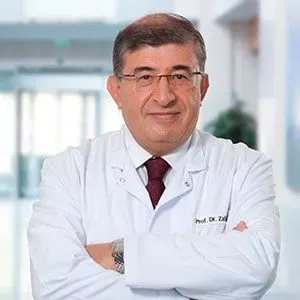
Zafer Gülbaş
Zafer Gülbaş
Prof. Dr. of Internal Medicine and Haematology
Oncology – Haematology-Oncology
Education and career
• Hacettepe University, Faculty of Medicine
• Anadolu University, Faculty of Medicine
• Atatürk Chest Diseases and Thoracic Surgery Centre
• Hadassah Medical Center, Israel
• Fred Hutchinson Cancer Research Center, United States
• M.D. Anderson Cancer Research Center, United States
• Princess Margaret Hospital, University of Toronto, Canada
Specialities and areas of medical interest
• Treatment of haematological tumours
• Stem cell transplantation
• Platelet function
• Flow cytometry
• Blood banks