














- Treatment methods for prostate cancer:
- Prostate needle biopsy: prostate cancer, the incidence of which rises after the age of 40, is screened for annually in male patients by digital rectal examination (DRE) and measurement of prostate-specific antigen (PSA). In patients whose examination results and/or PSA values are suspicious, a prostate needle biopsy is performed under general anaesthesia in the day-surgery unit.
- Robotic radical prostatectomy: patients diagnosed with prostate cancer after pathological examination are treated with robotic radical prostatectomy.
- Open surgery: in patients who are not suitable for robotic surgery, open surgery may be performed.
- Hormone therapy (HT) and radiotherapy (RT): hormone therapy (HT) and radiotherapy (RT) give good results in patients with locally advanced prostate cancer or who are not suitable for surgery.
- Other treatments: in widespread metastatic disease, surgical orchidectomy (removal of the testicles) or medical castration (hormone therapy) is used, as well as chemotherapy.
- Bladder cancer: in this type of cancer, known to be closely linked to smoking, the first sign is most often blood in the urine. Most bladder cancers are diagnosed at an early stage; without treatment, they tend to recur frequently and to progress. In patients with blood in the urine, the bladder tumour is examined by cystoscopy. Treatment methods:
- Transurethral resection of bladder tumour (TUR-BT): if a tumour is detected, transurethral resection of the bladder tumour (TUR-BT) is performed endoscopically.
- Chemotherapy: to prevent superficial bladder tumours, single-agent chemotherapy drugs may be instilled into the bladder as additional treatment.
- Cystoscopy: depending on the pathology results, patients whose tumour remains confined to the surface are checked by cystoscopy every 3 months.
- Radical cystectomy: if pathological examinations reveal an invasive cancer that has reached the muscle layer of the bladder, removal of the pelvic lymph nodes and construction of a new bladder from the small intestine may be necessary. This operation, called radical cystectomy, can be performed robotically or by open surgery.
- Other treatments: patients who are not suitable for surgery should be treated with a combination of radiotherapy and chemotherapy (RT-CT). In widespread metastatic disease, chemotherapy is given after cystectomy.
- Testicular tumours:
- Testicular tumours are of particular importance because they occur in young men of reproductive age and, with appropriate treatment, offer a high cure rate.
Treatment methods:
- Inguinal orchidectomy: in patients with a testicular mass, if a tumour is suspected, surgery is considered without delay and the tumour is removed urgently together with the testicle by inguinal orchidectomy. The whole body is then examined by computed tomography (CT). For treatment follow-up, serum levels of BHCG, AFP and LDH are used as tumour markers. Because testicular tumours behave differently depending on their pathological structure, follow-up and treatment arrangements are defined accordingly.
- Retroperitoneal lymph node dissection (RPLND): in patients with metastases in the lymph nodes around the aorta and vena cava in the retroperitoneal space, this tumour tissue is completely removed by lymph node dissection (RPLND).
- Other treatments: depending on the results of the pathological examination, patients may need additional chemotherapy (CT) and radiotherapy (RT).
- Kidney cancer
- Adrenal tumours
- Retroperitoneal space
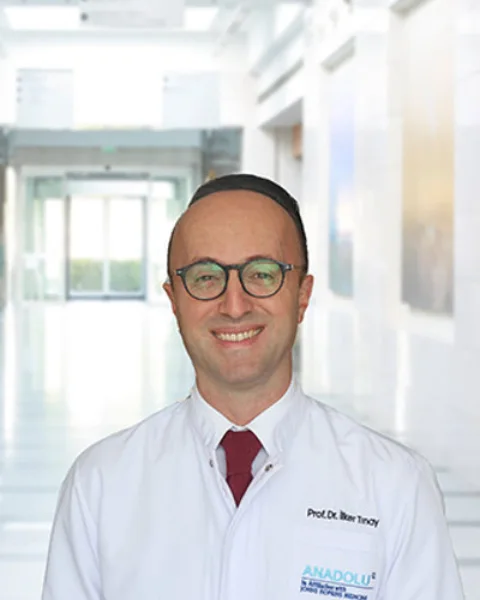
İlker Tinay
İlker Tinay
Education and career
- Istanbul University, Istanbul Faculty of Medicine
- Urology, Marmara University, Faculty of Medicine
Memberships
- Member of the Executive Board of the Society of Urologic Oncology
- Secretary of the Bladder Tumour Research Group of the Society of Urologic Oncology
- Board member of the Urological Surgery Association, Northern Marmara branch
- International Bladder Cancer Network
- Member of the European Association of Urology (EAU)
- Member of the American College of Surgeons
Research and publications
- Marmara University, Faculty of Medicine, scientific encouragement award for residents, 2008
- National Urological Surgery Congress, award for best junior academic presentation, 2012
- Scientific research award of the Society of Urologic Oncology, 2019